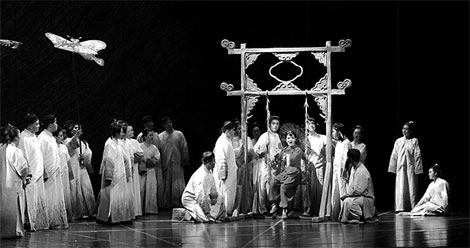
Sandalwood Death (opera)
Overview
Sandalwood Death is an opera adapted from the novel of the same name written by renowned Chinese author and Nobel Prize laureate Mo Yan. The opera, a collaboration between Mo Yan and Li Yuntao, a professor at Shandong University of Arts, embodies the rich cultural and historical tapestry of China during the late Qing Dynasty. This adaptation into an opera marks the first time Mo Yan's literary work was transformed into such a performance art form, taking a total of six years to complete.
Background and Inspiration
Mo Yan, deeply influenced by his rural upbringing in Gaomi county, Shandong province, often draws from local history, folk tales, and personal experiences in his works. Sandalwood Death reflects his intimate connection with his hometown and the Maoqiang Opera, a traditional form of Chinese folk opera. Mo Yan's incorporation of the operatic style into his novel reflects his belief in the significant cultural impact of dramas in rural China. During the early 20th century, when literacy was low, folk operas served as primary educational tools, imparting knowledge of history, morality, and values to the populace.
Storyline
Sandalwood Death is set during the tumultuous period of national enmity and family conflict in the late Qing Dynasty, specifically focusing on the anti-colonial struggles against German troops in Shandong Peninsula. Central to the narrative is Sun Bing, a folk artisan who leads the resistance and is ultimately sentenced to the gruesome execution known as "sandalwood death." The opera weaves a complex tale of familial and national loyalty, centering on Sun Bing's daughter, Sun Meiniang, and exploring the relationships between her father, godfather, and father-in-law. Through these characters, the opera delves into themes of patriotism, defiance against oppression, and the unwavering spirit of the Chinese people.
Adaptation and Performance
The opera Sandalwood Death was performed at the Third China Opera Festival in January 2018, showcasing the rich collaborative efforts in its creation. Li Yuntao contributed not only as a librettist alongside Mo Yan but also as a composer, ensuring that the music and narrative seamlessly intertwine to reflect the cultural and emotional depth of the original novel. The opera has been performed at prominent venues such as the National Centre for the Performing Arts, reflecting its significance in the Chinese cultural landscape and its appeal to both national and international audiences.
Cultural Significance
Sandalwood Death stands as a testament to the enduring power of traditional Chinese opera and its ability to convey complex narratives and emotions. By integrating elements of Maoqiang Opera, Mo Yan bridges the gap between literature and performance, preserving and promoting a vital aspect of Chinese cultural heritage. The opera not only highlights the historical struggles and resilience of the Chinese people but also underscores the importance of traditional arts in contemporary society. Through the adaptation of his novel, Mo Yan continues to expand the boundaries of his literary influence, contributing to the global appreciation of Chinese culture.
Development and Challenges
The journey of Sandalwood Death from novel to opera was marked by challenges and innovations. Maoqiang Opera, the traditional folk art form that inspired Mo Yan's writing style, has faced numerous challenges, including dwindling audiences and a shortage of young performers. However, nationwide efforts to revive and sustain traditional arts have led to a resurgence of interest in Maoqiang Opera, with new generations of performers and audiences embracing this cultural treasure.
The adaptation of Sandalwood Death into an opera represents a significant achievement in the preservation and revitalization of Maoqiang Opera. Through the support of both public and private sectors, traditional arts like these continue to gain momentum, ensuring their relevance and vitality in modern society.
Influence
Mo Yan's Sandalwood Death serves as an example of how literature and opera can intersect to create a powerful cultural narrative. The opera's success has paved the way for further adaptations of literary works into performance arts, demonstrating the potential for cross-cultural collaborations and the sharing of Chinese culture with the world. The story of Sandalwood Death and its transformation into an opera will continue to inspire future generations of writers, performers, and audiences, fostering a deeper appreciation for the rich tapestry of Chinese cultural heritage. Article reference1. Maoqiang Opera stages a revival. chinadaily.com.cn. 20242. Humble roots form Nobel ideas. chinadaily.com.cn. 20193. Best bets. chinadaily.com.cn. 2018Photo Gallery(2 pictures)CategoriesArtsTagModern and Contemporary LiteratureChinese Modern LiteratureTheaterCatalogue1. Overview2. Background and Inspiration3. Storyline4. Adaptation and Performance5. Cultural Significance6. Development and Challenges7. Influence- - - []








